
Pocket Money by Age (UK): How Much Should You Give in 2026?
· 7 min read
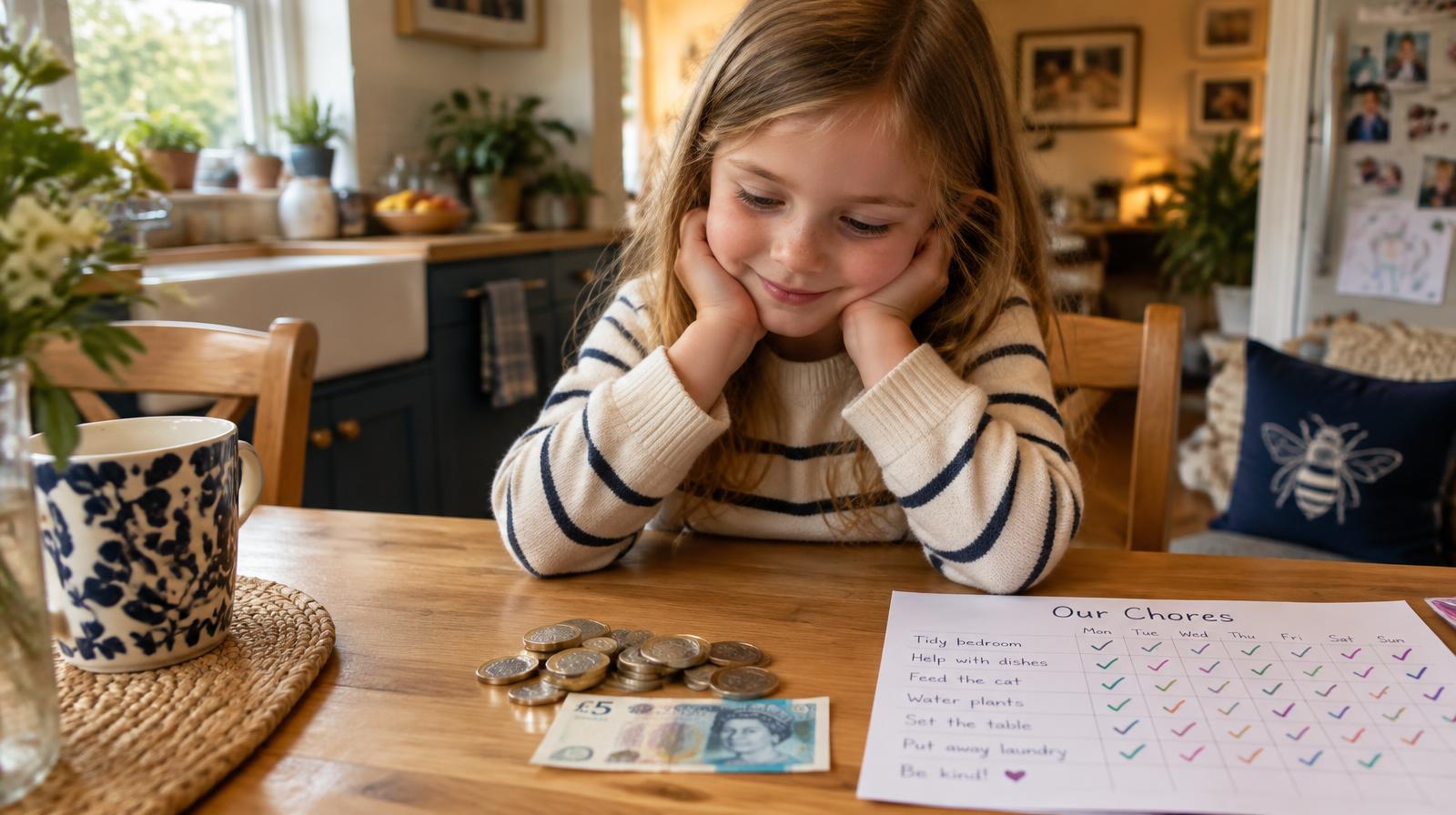
Every parent asks this at some point, usually in a supermarket queue. How much pocket money is normal? Should it be earned? And will it actually change anything, or just become one more thing to remember on a Saturday morning?
Here are typical UK amounts by age, a simple way to link money to chores, and what happened in our own house when our eight-year-old started earning hers.
Typical pocket money by age in the UK
These are weekly ranges most UK families land in. Treat them as a guide. The more your child is expected to pay for themselves, the higher the amount can sensibly be.
| Age | Per week | Paid jobs that fit | What it usually covers |
|---|---|---|---|
| 4 to 6 | £1 to £3 | Water plants, set the table, feed a pet | A small treat or saving towards a toy |
| 7 to 9 | £3 to £5 | Unload the dishwasher, sort washing, take out recycling | Snacks, stickers, small toys, saving for something bigger |
| 10 to 12 | £5 to £8 | Hoover a room, clean a sink, make a packed lunch | Treats with friends, games, magazines |
| 13 and over | £8 to £15 | Cook a family dinner, wash the car, do a shop | Days out, phone top ups, clothes they want |
Should pocket money be tied to chores?
We split jobs into two lists. Expected jobs come with living in a home: making your bed, clearing your plate, putting your shoes away. Those are not paid. Extra jobs help the whole family, like washing the dishes or cleaning the windows. Those earn money.
This keeps basic help from turning into a negotiation, while still showing children that effort adds up. If you need ideas for each list, our age-appropriate chores guide has a full list by age.
What happened when our eight-year-old started earning
Our daughter is eight. She is always excited to tick off her chores in Lanterhome, because each one adds money to her balance. She can see it there in her own account. It is not a parent saying "I'll give you a pound later" and then forgetting. It is real, and she can check it whenever she likes.
The supermarket aisles went quiet
Before, every shop came with requests. A snack from this aisle, a toy from that one. It added up to more than you would think. Now she earns her own money, and she knows how long it took to earn. So she thinks before she asks, and most of the time she decides it is not worth it.
The surprising part is that what she earns each week is less than I used to spend on those impulse treats. Paying for chores has actually cost us less, and she has learned to budget along the way.
Fewer repeated reminders
Like most parents, I got tired of asking five times for her to get in the shower. We agreed a simple rule: points or money can be taken off for things like ignoring a reasonable request. Now when I feel the frustration building, I just remind her of the rule. It is usually enough. She gets moving, and with more energy than before, because she would rather keep what she has earned.
A sense of pride
The thing I did not expect was how proud she is. Money she earned herself feels different to money she was handed. She talks about it, plans with it and protects it.
Spend, save, give: splitting every pound
A simple split helps children see that money has more than one job. In Lanterhome we use 45% to spend, 40% to save and 15% to give, whether that is a charity or a treat for a sibling. Even £3 a week becomes a few pounds saved by half term, which is a very concrete lesson for an eight-year-old.
Cash jar or app?
Cash is great for little ones learning what coins are. From around seven, a tracked balance starts to make more sense. It removes the "you promised" arguments, it is there when you are out without change, and the deductions and rewards are visible to everyone, so they feel fair.
Frequently asked questions
How much pocket money should an 8 year old get in the UK?
Most UK families give an eight-year-old somewhere between £3 and £5 a week. What matters more than the amount is being clear about what it has to cover, so your child knows that snacks and small toys now come out of their own money.
Should pocket money be linked to chores?
A mix works well. Jobs that come with living in a home, like tidying your own room, are expected and unpaid. Extra jobs that genuinely help the family can earn money or points. Children learn both to contribute and to earn.
Is it fair to take money off for bad behaviour?
It can be, if the rule is agreed in advance and used calmly. Small, predictable deductions for things like refusing to shower are fairer than shouting, and the reminder alone is often enough to get a child moving.
When should children start getting pocket money?
Around four to six, once they can count coins and understand that something costs money. Start small and increase it on a birthday so the rise feels earned.